How long do I have to bring a Missouri slip-and-fall claim?
Missouri generally provides five years for a personal-injury action under RSMo § 516.120, but government notice rules and other exceptions can be much shorter.
Falls on unsafe property
A fall case depends on why the condition was dangerous, what the property owner knew or should have known, and whether evidence can document what happened.
Request a free consultation
This guide provides general Missouri information. It cannot determine fault, coverage, deadlines, or value without the facts and applicable policies.
A spill can be cleaned, ice can melt, a warning sign can be moved, and surveillance video can be overwritten. Photograph the exact condition, the surrounding area, lighting, footwear, warning signs or their absence, and any visible injury. Report the fall and ask that the incident and available video be preserved.
Get appropriate medical care, identify witnesses, keep the clothing and shoes you wore, and avoid guessing about how long the condition existed.

Missouri’s natural-accumulation rule can limit liability for snow or ice that accumulated naturally and is a condition generally known in the community. That is not the end of every case. Liability may turn on whether the property owner created or increased the hazard, whether drainage or refreezing produced an unusual condition, whether snow or ice was cleared negligently, or whether the owner had actual or constructive knowledge of a danger that was not reasonably apparent.
Photographs of drainage, plow piles, downspouts, treated and untreated areas, footprints, and weather conditions can matter. The lease and maintenance contracts may also identify which owner, tenant, manager, or contractor controlled the area.
A missing warning sign is important evidence, but it does not automatically prove the entire claim. The questions include what caused the liquid, how long it was present, whether employees created it or should have discovered it, what inspection practices existed, and whether the condition was open and obvious.
Under Sheil v. T.G. & Y. Stores Co., 781 S.W.2d 778 (Mo. banc 1989), the length of time a hazard existed is not conclusive in a self-service-store case. Courts consider the totality of the circumstances, including the method of merchandising and the nature of the hazard, when deciding whether the store failed to use ordinary care against a foreseeable risk. The decision does not make a store an insurer of every customer.
Potential responsibility may extend beyond the store name on the sign. Depending on the evidence, defendants can include a property owner, commercial tenant, property manager, cleaning company, maintenance contractor, or another business that created or controlled the condition.
Incident reports, inspection logs, work orders, surveillance video, employee schedules, and maintenance contracts can show who knew what and when.
Parking-lot cases may involve oil, algae, drainage, painted surfaces, worn coatings, loose gravel, potholes, or a recurring wet area. The key is not simply that the surface was slick. The claim needs evidence of a dangerous condition, control, notice, causation, and damages.
A qualified expert may evaluate surface friction in a disputed case. Devices and standards, including tribometers such as the Brungraber Mark II, can be relevant when used by a properly qualified expert under reliable conditions; no single test replaces the full factual investigation.
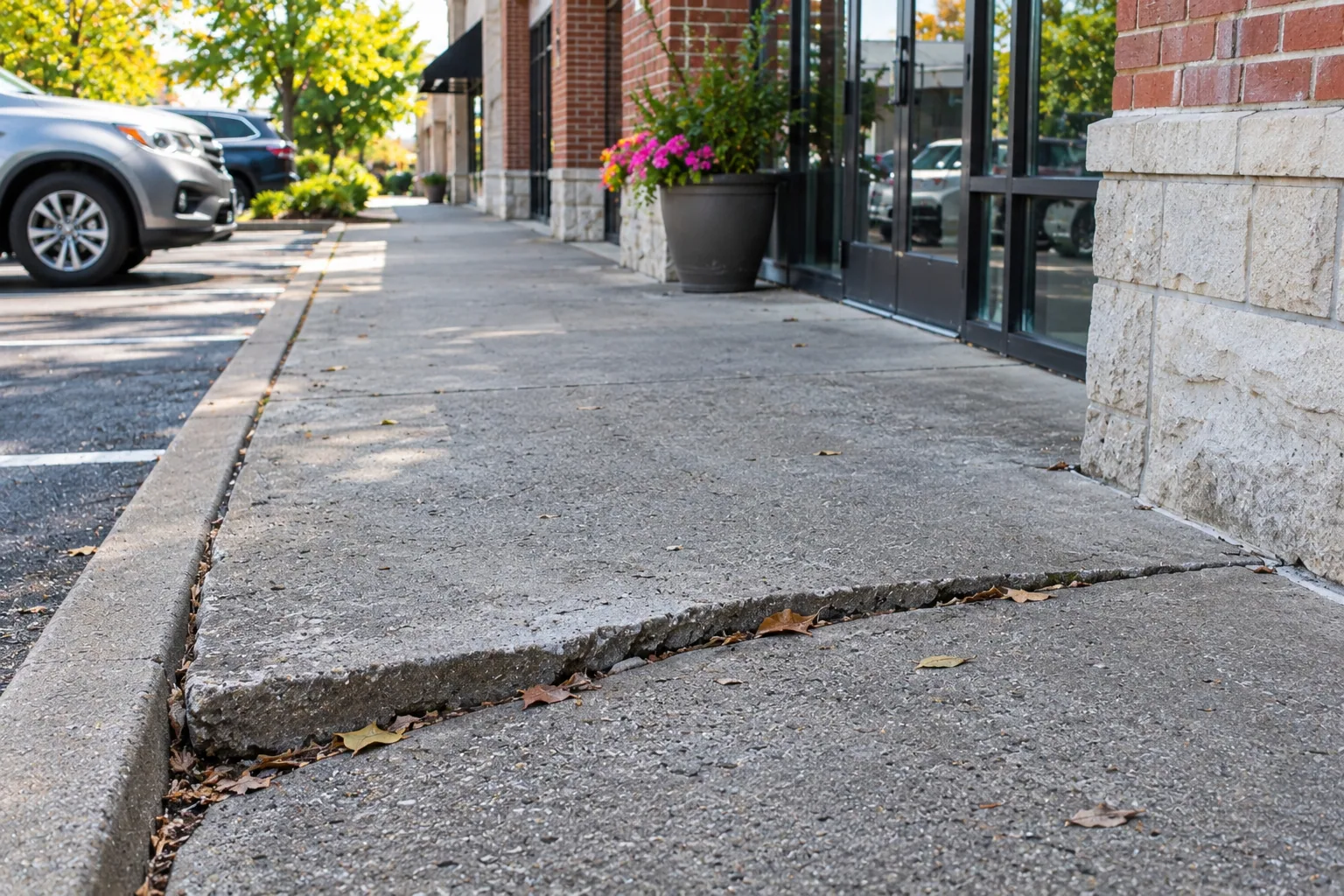
First identify who controlled the sidewalk and whether the condition involved private property or a public way. Ownership, ordinances, maintenance duties, prior complaints, repairs, and the size and visibility of the defect can all matter.
For certain claims against Springfield arising from a defect in a city bridge, boulevard, street, sidewalk, or thoroughfare, RSMo § 82.210 may require written notice to the mayor within 90 days. Governmental-immunity rules and statutory exceptions can also affect whether a claim exists. Immediate review is important.
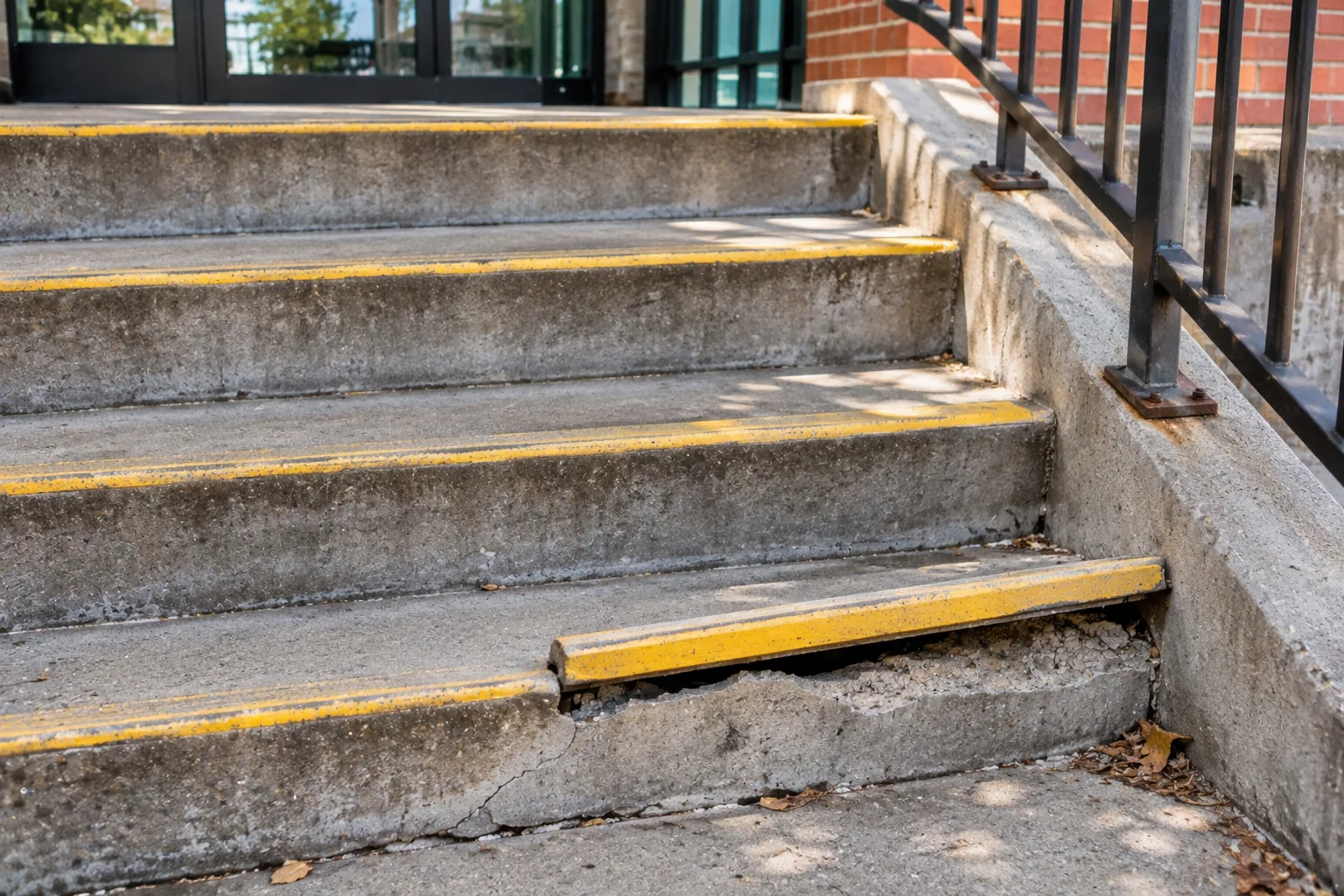
Landlord responsibility depends on control, the lease, the location of the stairs, notice, repair history, building conditions, and why the fall occurred. Common-area stairs controlled by an owner or manager raise different issues from an area exclusively controlled by a tenant.
Save prior repair requests, emails, texts, photographs, inspection records, and the names of neighbors who knew about the condition.
Missouri premises law has traditionally described visitors as invitees, licensees, or trespassers. A customer entering a store for the store’s business is generally treated differently from a social guest or someone entering without permission. The classification can affect the duty that was owed, but the exact relationship and facts must be reviewed.
Missouri also uses pure comparative fault. If an insurer argues that you should have seen the hazard, a percentage of fault may be disputed; partial fault does not automatically eliminate the claim.
A Missouri personal-injury claim is generally subject to the five-year period in RSMo § 516.120. A wrongful-death action generally has a three-year deadline under RSMo § 537.100. Government claims, notice requirements, contract terms, and other exceptions can be much shorter.
A deadline is not a safe evidence-preservation schedule. Video, inspection records, witnesses, and the condition itself can disappear long before the filing period ends.
Common questions
Missouri generally provides five years for a personal-injury action under RSMo § 516.120, but government notice rules and other exceptions can be much shorter.
Usually notice is an important issue. Proof may show the business created the condition, actually knew about it, or should have discovered it through reasonable inspection. The business’s method of operation can also affect the analysis.
The absence of a warning can support a claim, but you still must prove a dangerous condition, duty, breach, causation, and damages.
Missouri’s natural-accumulation rule can limit liability, but exceptions may apply when a defendant creates or increases the hazard, undertakes clearing negligently, or has notice of an unusual danger. The precise facts matter.
The insurer may argue comparative fault. Missouri’s pure comparative-fault system can reduce a recovery by an assigned percentage without necessarily eliminating the claim.
Possible defendants include owners, tenants, managers, maintenance or cleaning companies, contractors, and condominium or homeowners’ associations, depending on control and the source of the hazard.
Report the fall and request a copy if one is available, but do not assume the business’s report is the only evidence. Preserve your own photographs, witness information, medical records, shoes, and clothing.
Governmental immunity and statutory exceptions apply. Certain Springfield street or sidewalk defect claims may require written notice within 90 days under RSMo § 82.210. Seek prompt review.
Possibly. Control of the area, notice, lease terms, prior complaints, repair history, and the nature of the defect are important.
Photographs and video, witness names, incident reports, medical records, footwear and clothing, receipts, repair requests, communications, and the exact location and time of the fall can all matter.
Statutes can change and case law affects how they apply. These links are starting points, not a substitute for a case-specific review.