Can I recover if I was not wearing a helmet?
Helmet requirements depend on age and permit status. Helmet use does not determine who caused the crash, although an insurer may dispute whether it affected a particular injury.
Motorcycle collisions
Motorcyclists can suffer serious injuries even in crashes that appear minor to other drivers. The claim should reflect the evidence—not assumptions about riders.
Request a free consultation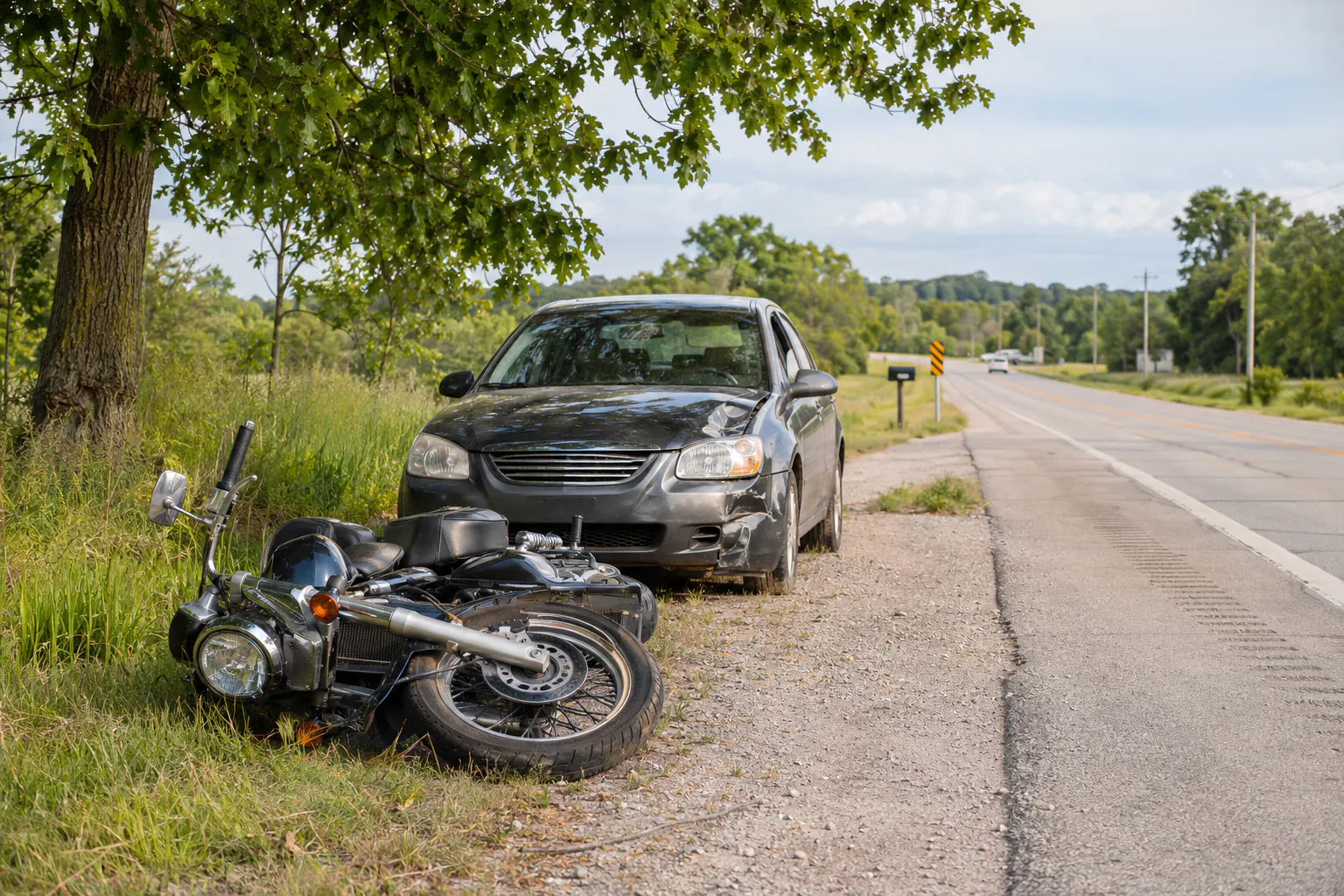
This guide provides general Missouri information. It cannot determine fault, coverage, deadlines, or value without the facts and applicable policies.
Motorcycle claims often begin with an unfair assumption that the rider must have been speeding, weaving, or taking a risk. A serious investigation focuses instead on sight lines, vehicle positions, turn movements, traffic controls, roadway evidence, electronic data, witnesses, protective gear, and the injuries themselves.
Common collisions involve a driver turning left across a motorcycle’s path, changing lanes without seeing the bike, following too closely, opening a vehicle door, or entering from a driveway. Visibility is a factual question—not a reason to blame the rider automatically.
A rider has little protection from impact with a vehicle, pavement, or fixed object. Claims may involve fractures, road rash, head injury, spinal injury, nerve damage, scarring, surgery, rehabilitation, time away from work, and changes in mobility or independence.
The claim should document the course of treatment and the practical effects of the injury, not just the first emergency-room bill.

Missouri requires protective headgear for operators and passengers under age 26 and for operators age 26 or older who hold an instruction permit. The effect of helmet use on a particular injury claim depends on the injury and evidence; it does not decide who caused the collision.
Missouri does not have a statute expressly prohibiting motorcycle lane splitting. The general lane-use rule in RSMo § 304.015.5(1) still applies, and absence of an express ban is not permission. Whether a specific maneuver was lawful or negligent requires the roadway facts—not a blanket slogan.
Do not authorize disposal or destructive repair of the motorcycle, helmet, clothing, or electronic equipment until important evidence is documented. Photograph the bike, damage patterns, helmet, roadway, debris field, and visible injuries. Save GPS or camera data if available and identify witnesses promptly.
Common questions
Helmet requirements depend on age and permit status. Helmet use does not determine who caused the crash, although an insurer may dispute whether it affected a particular injury.
Missouri does not expressly authorize lane splitting. General single-lane and safe-passing statutes apply, so the legality and fault analysis depend on the actual maneuver and roadway.
Failure to see a motorcycle does not automatically excuse a driver. Sight lines, lighting, speed, signals, lane position, witnesses, and vehicle damage can show whether reasonable care was used.
Preserve it until the damage and any relevant components are documented. In a disputed crash, the motorcycle itself may be important evidence.
Missouri applies pure comparative fault. A percentage of responsibility may reduce a recovery but does not automatically eliminate the claim.
Statutes can change and case law affects how they apply. These links are starting points, not a substitute for a case-specific review.